
MOTION CONTROL / SERVO CNC
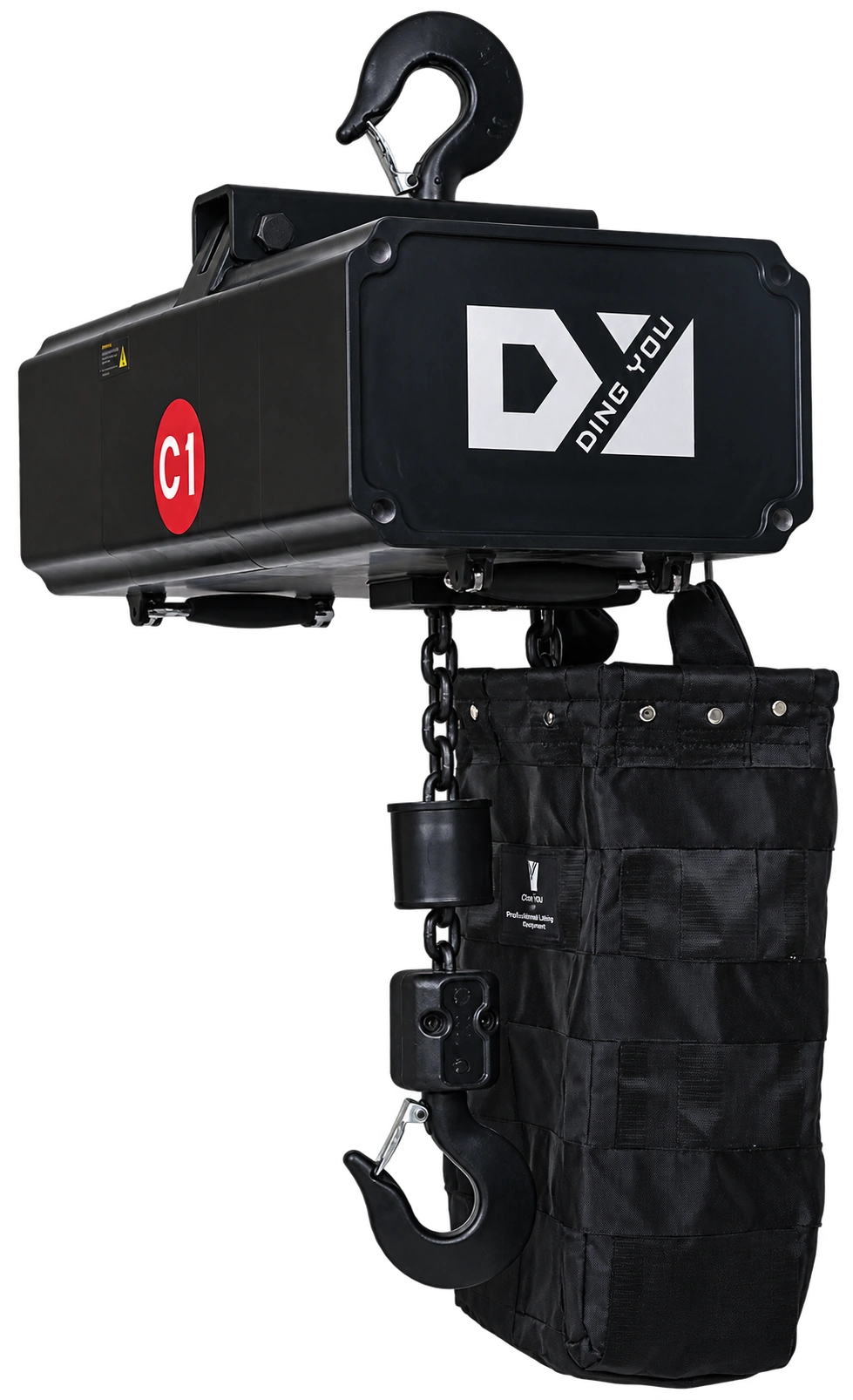
Servo CNC stage hoists
& motion control.
Dingyou servo CNC hoists combine servo lifting with an operator console and distribution equipment for coordinated stage movement. Define the motion, loads and axes first, then discuss the drive arrangement and integration scope.
Servo drive
Integrated or separate
Multi-axis
Coordinated control
DMX512 / TCP
Console interfaces
DESIGNED FOR YOUR APPLICATION
Servo lifting system features.
Flexible drive architecture
Choose integrated or separate drive arrangements according to the installation and operating requirements.
Coordinated motion
The console supports programming and multi-axis scene operation for changing stage configurations.
Load sensing option
Optional load sensing supports real-time load monitoring within the specified configuration.
Dual electromagnetic brakes
The catalogue describes a dual electromagnetic braking arrangement independent of the motor.
System connectivity
The control system supports DMX512 and TCP interfaces for external triggering.
Project-specific selection
Discuss rated load, travel speed, lifting height and the number of lifting points before selecting a system.
Build the servo system around your motion brief
| System element | Catalogue scope | Project detail to confirm |
|---|---|---|
| Hoists and drives | Integrated or separate drive arrangements | Rated load, speed, lift and installation space |
| Load sensing | Optional sensing at the lifting point | Which axes require monitoring and how data is used |
| Distribution equipment | Centralised supply and system connections | Power requirements, routing and equipment locations |
| Operator console | Programming and multi-axis scenes; DMX512 / TCP references | Supported functions, external equipment and integration responsibilities |
From a creative idea to a technical brief.
A motion description gives the supplier and integrator a common starting point. It should explain what the audience will see and how the equipment is expected to achieve it.
Describe each axis
Identify every moving object, its load, travel and required speed. Note which axes move independently and which must follow coordinated cues. Include a drawing or storyboard with the available space and proposed lifting locations.
Define the control boundary
Name the show console or automation system already specified. Explain whether external commands trigger stored scenes or need another form of control. Ask for a written interface and function review; DMX512 or TCP support alone does not confirm the complete integration.
Agree the handover scope
Identify who supplies the hoists, drives, distribution equipment, cables and console. Include commissioning responsibilities, required drawings, operator documentation and acceptance criteria in the project discussion.
Confirm options model by model
Load sensing is described as optional. Drive layout and performance vary with the selected model. Request an itemised configuration instead of assuming that every catalogue feature applies to every servo hoist.
Frequently asked questions
How does a servo enquiry differ from a standard stage-hoist enquiry?
A servo enquiry needs the movement sequence and the relationships between axes as well as load and lift. Include the intended cues, operator workflow and existing control equipment so the entire motion system can be discussed.
Can I choose integrated or separate drives?
The catalogue describes both arrangements. Share the installation space, load and speed requirements with Dingyou to confirm which configuration is available and appropriate for review.
Is load sensing included?
The catalogue identifies load sensing as optional. State which lifting points require it and ask the quotation to show the sensing equipment and supported functions explicitly.
Will the system work with my existing console?
Compatibility requires a review of the console model, interfaces, expected functions and system design. Send this information with the motion brief; a protocol name alone is insufficient to confirm operation.
Related guides and product information
Product source: Dingyou 2026 catalogue, printed pages 27–30. Features and integration options depend on the selected equipment configuration.
Open the Dingyou 2026 product catalogueNeed the current specification? Ask for the documentation for the exact model and configuration in your quotation.
LET’S PLAN YOUR NEXT LIFT
Great shows start
with the right rigging.
Tell us your load, lifting height and application. We will help you find a suitable hoist and control configuration.