
APPLICATION NOTES
Touring or Permanent Installation: Planning Your Lifting System
Published · Updated · Dingyou Editorial
Two very different working environments, and the practical details to include when planning each one.
At a glance
Touring briefs emphasise repeated transport, setup and connection. Permanent-installation briefs emphasise equipment locations, operator access, integration and handover. Both need point loads, lift, power and a clearly defined control package.
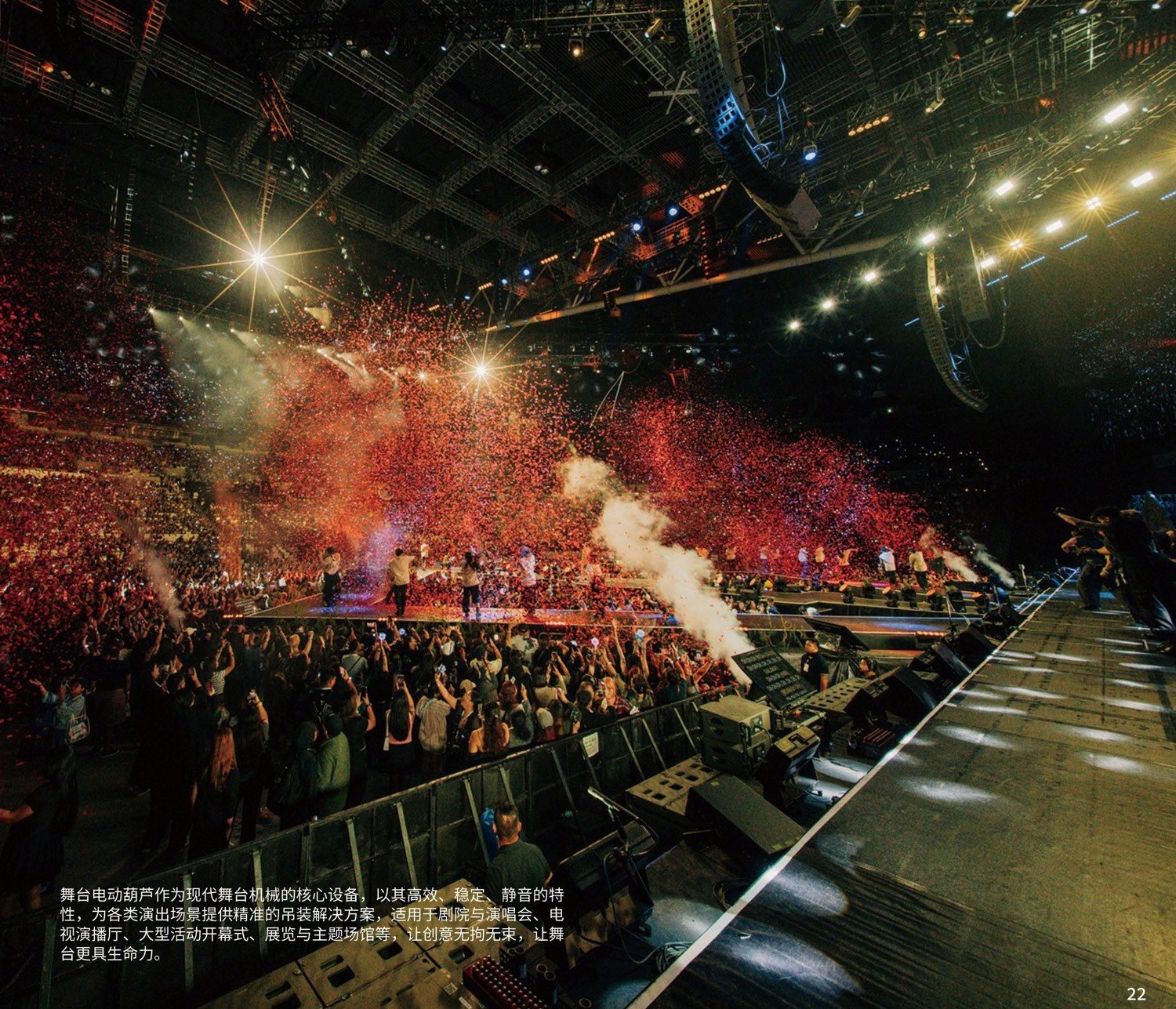
Match the equipment to its working day
A touring production and a permanent venue may both use electric chain hoists, but their everyday workflows can be very different. Touring equipment is repeatedly packed, transported and connected. Installed equipment may remain in the same position while operators, productions and venue schedules change. Describing this working pattern helps define the scope of the lifting system.
For touring, plan the complete package
Consider how the hoists, controllers, chains and cables will be organised between shows. Include your preferred case arrangement, identification method and connection layout in the enquiry. A consistent equipment schedule helps the crew match each component to the production plan. The quantity of hoists alone does not describe the full package needed on site.
For venues, describe access and integration
For a theatre, ballroom or studio, provide the proposed installation location, available headroom and access arrangements. Explain where the operator will work and how the lifting equipment fits alongside other stage systems. Include any existing control platform and the documentation available for it. Installation drawings should identify the responsibilities of the equipment supplier, structural team and system integrator.
Choose controls around the workflow
A portable controller may suit a package that moves between locations. A fixed installation may require a different operator interface and a more detailed integration brief. Dingyou’s catalogue includes portable controller options and PLC touchscreen control configurations. Discuss channel count, connections and required functions with the supplier; availability depends on the selected configuration.
Allow for handover and future service
Specify which manuals, drawings, equipment records and spare-parts information should accompany the delivery. Identify who will commission the system and who will manage its ongoing inspection and servicing. Where possible, include these requirements in the purchase scope instead of leaving them until delivery. Your venue or production team should also define the operating procedures for its actual application.
Build the brief around the application
There is no single equipment package that fits every stage. Tell Dingyou how often the system moves, where it will be used and how the operator needs to control it. We can then discuss hoist and controller options against a more complete picture of your project.
Questions to resolve with the project team
- How often will the equipment be packed, moved and reconnected?
- Which equipment stays with the production and which is provided by each venue?
- Where are the lifting points, operator station, cabinets and cable routes?
- What access is available for installation, inspection and service?
- Does the project need setup positioning, grouped lifting or programmed motion?
- Who is responsible for the supporting structure, installation, commissioning and operator handover?
Planning questions
Should a permanent venue always choose PLC control?
No. The operator workflow and required functions should lead the discussion. PLC control is one catalogue option; provide the actual operating and integration requirements before selecting a configuration.
What should be recorded at handover?
Agree the required manuals, drawings, equipment identification, commissioning records and service information in the project scope. The installer and venue team should define the records needed for their specific system.
Related guides and product information
Product reference: Dingyou 2026 catalogue, company application profile on printed pages 3–4 and control systems on pages 37–38.
Open the Dingyou 2026 product catalogueNeed the current specification? Ask for the documentation for the exact model and configuration in your quotation.
Let’s discuss your project.
Send us your application and requirements to start a conversation about the right equipment.
Contact Dingyou ↗